
DCIM and GTC: What information, for whom, and for what audience?
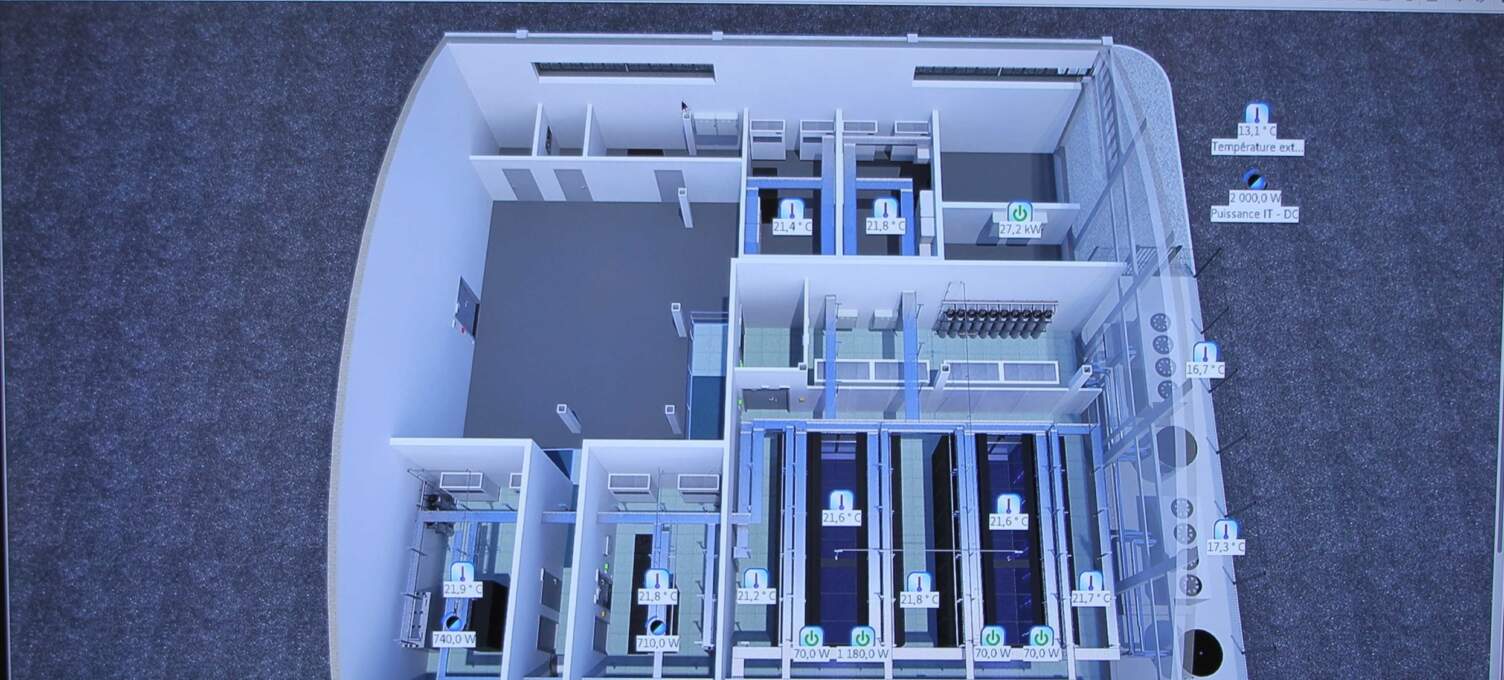
Managing a data center requires the use of specific tools and software. As a result, some professionals have developed simple, practical, and effective solutions to efficiently manage data center infrastructure. These include DCIM (Data Center Infrastructure Management) and CMMS (Computerized Maintenance Management System) software—two solutions that not only optimize energy consumption but also monitor all multidirectional data flows through a single interface. By choosing these software solutions, you enable your data center to succeed in the challenge of achieving both energy efficiency and security. What should you know about these tools for the dynamic management and control of data centers?
Why consider DCIM and BMS solutions?
There are many reasons why computer engineers have developed software capable of making data center infrastructures more efficient and effective. This need for performance is therefore the driving force behind the development of more dynamic data center management tools. Consequently, the use of such tools stems from a number of shortcomings observed in data center management. The stated reasons for adopting this solution are:
Reducing operating costs and energy consumption on a post-by-post basis
Thanks to DCIM and BMS software, data centers significantly reduce operating costs. In addition, they also help optimize energy consumption on a per-workstation basis. That said, GTC alone fine-tunes the operation of the data center’s electrical components, including lighting, heating, and more. As a result, you’ll achieve significant savings across multiple areas (energy, maintenance costs, etc.) while minimizing waste and lost revenue associated with unreliable operations, process gaps, and improvisation.
Implement a centralized management interface and enhance security
The Data Center Infrastructure Manager (DCIM) software provides data centers with a centralized management platform. This interface enables various administrators to gain a comprehensive overview of the management of IT components, rooms, and/or equipment. These administrators will now be able to view, monitor, and even control operating conditions, as well as the performance and efficiency of the facilities. From now on, the various systems are managed and monitored via a sophisticated dashboard.
Plan and anticipate needs
Planning for and anticipating the current and future needs of a data center has never been an easy task. Using a centralized DCIM management and monitoring tool enables data centers to anticipate their needs. These needs particularly concern the requirements and/or constraints related to air conditioning or cooling and electrical power. This foresight allows for optimal adaptation to modifications, replacements, additions, or relocations of data center equipment.
Reduce maintenance costs
Data center maintenance comes at a cost. As a result, centralized technical management (CTM) software enables data center managers to effectively reduce maintenance costs or budgets. This reduction is achieved through the real-time monitoring of facilities provided by the CTM software. Nothing escapes the watchful eye of data center managers. Furthermore, this new approach to active building and facility management not only helps the data center achieve cost savings but also streamlines the operation of equipment and/or facilities, including buildings.
Optimizing communication and management practices
Communication within an organization or structure helps bridge gaps and optimize performance. In data centers, it not only helps bridge any existing gaps but also highlights the needs and shortcomings of various departments or administrative units. Thanks to these tools, communication among data center managers is optimized.
The reasons mentioned above are why the use of DCIM and GTC tools or software is essential. Data center managers will no longer struggle to boost the efficiency and performance of the facilities under their care. They will now have full control over the management of buildings and server rooms.
DCIM and GTC: Two Dynamic and Essential Software Solutions
Centralized data center management software is specifically designed for IT infrastructure managers and those responsible for building security at a data center. They are required to account for the management of server rooms and IT equipment or infrastructure. To streamline the management of these two key areas of a data center—IT infrastructure and data center facilities—these tools are indispensable. As a result, the managers of these various departments (facilities and IT) are the primary targets for the developers and publishers of these two data center management tools.
DCIM focuses specifically on the management and monitoring of IT equipment, including server rooms in data centers. This centralized, monitored management has a significant impact on the energy consumption of these facilities, while also optimizing workspace management and security levels. Changes and modifications to IT infrastructure become easier to manage. Furthermore, availability and operations management are now handled through a consolidated interface. The goal of this software’s designers is to bring all management of the IT infrastructure and/or IT room into a single point of control.
This enables the manager to maintain control over all data center infrastructure and components. From change management to cabling control, power and energy management, operations—including thermal management—everything is handled through the DCIM interface. This streamlining of data center IT room management processes, including various infrastructure components, has enabled the transition from traditional, manual operations to more modern and efficient ones. Unlike DCIM, which places particular emphasis on managing a data center’s IT assets and physical components (server rooms, IT components, etc.), BMS is more technical.
This centralized technical management software is essentially an automated system for managing multidirectional data flows within a specific technical area. It oversees the technical infrastructure of a data center, particularly the electrical systems. Thanks to this software, the detailed management of technical areas is optimized. This is achieved through sensors installed within the facility. The CMMS uses building automation to provide control from a single interface. Using this software, the manager can monitor the status of the systems within a given technical system, perform maintenance tasks, generate statistics, conduct operational monitoring and evaluation, and much more.
The goal is to ensure the safety, reliability, and efficiency of all systems in order to boost their profitability. The software provides you with all information and data related to the energy consumption and operation of the equipment. The main benefits include reduced energy consumption, lower operating and maintenance costs, and optimal security for technical systems and other facilities. Thus, building automation (control and regulation of lighting, individual rooms, ventilation, heating, etc.) is designed to improve energy efficiency and the management of technical systems or facilities.
DCM and GTC: How to Implement Them?
Implementing BMS and DCIM management systems requires expert guidance. This software requires the configuration of specific scenarios necessary for its operation. These scenarios enable the management of multiple applications. The implementation follows a well-defined process. It revolves around:
Needs assessment and discussion of objectives
This is the first step in implementing DCIM and BMS software. It involves analyzing a data center’s actual needs based on user services to ensure an effective solution. Furthermore, stakeholders must align on objectives to avoid counterproductive solutions.
Set priorities and develop a tailored solution
A superficial approach is not acceptable at this level. Instead, we must focus on the essentials to ensure the solution meets the performance requirements of the system. Factors such as user experience, the automation of native applications, the operating principles, and others must be taken into account.
Document existing data, processes, and tools
When managing a data center, formalizing or documenting the current state provides a solid foundation, especially when planning to install a new system. Therefore, all IT and facilities processes must be integrated.
Equipment Installation and DCIM Integration
Equipment such as sensors, actuators, and pre-programmed scenarios—as well as the integration of DCIM into the existing IT system—constitutes the final step in the process. Once this infrastructure has been installed, it is now necessary to monitor and ensure the proper operation of the systems.
This approach is all the more important because it ensures the successful installation of dynamic data center management software. Once installed, these systems will enable the organization to improve its efficiency and performance. Automation, through building automation systems, will enable streamlined, networked management of building facilities and systems. As a result, IT and facilities managers will have the tools to boost the operational efficiency, performance, and energy efficiency of data centers thanks to this software.