
Industry 4.0: Why the containerized data center (PMDC: Portable Modular Data Center) is a highly relevant solution for the industrial sector
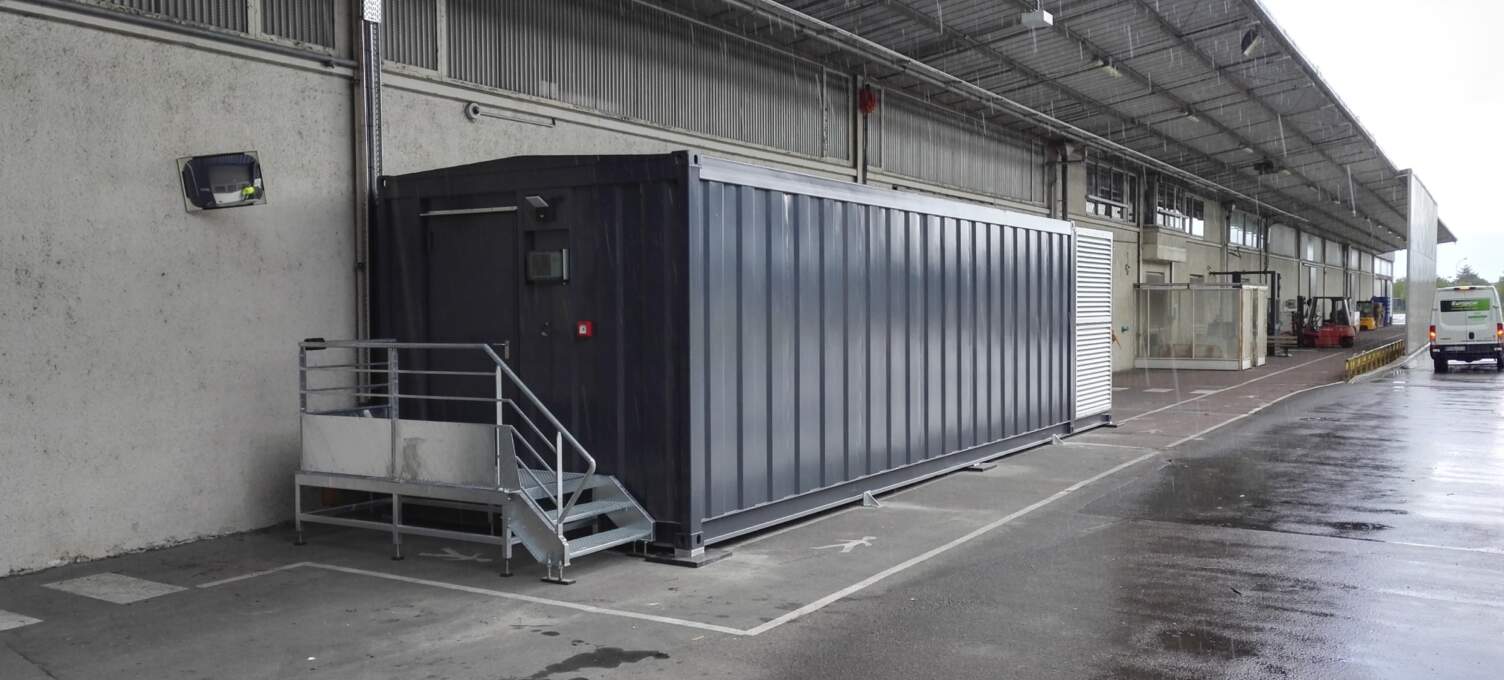
Digital transformation is a process embraced by the vast majority of companies, whether they are small, medium-sized, or large corporations. The digital transformation of industrial companies is also gaining momentum, and certain precautions must be taken into account to ensure the success of such projects. This is particularly true for data centers, which form the backbone of IT infrastructure.
New Challenges for Industry 4.0
The transition to Industry 4.0 represents the next step for organizations that have not yet adapted to this new trend. This transformation brings with it a number of challenges that industries will have to face. They will need to overhaul their business processes, change work habits, implement new technologies to support their daily operations, manage HR aspects, make trade-offs regarding the financial impacts these changes will entail, and more.
Urbanization of industrial systems
To support this transformation of industries, IT and business leaders will need to take several factors into account.
Data collection
Big Data is one of the key features of the new industrial landscape. Indeed, Industry 4.0 systems incorporate more sensors, IoT probes, and mobility solutions. All these technologies generate a massive amount of data that must be collected and fed into the company’s various information systems. This information is crucial for the smooth running of operations on the shop floor because it enables:
- Greater responsiveness from maintenance teams, who can anticipate certain breakdowns
- Improved decision-making by management to ensure alignment with the company’s strategic objectives
- The development of reliable and relevant performance metrics for assembly lines
- Automated management of the collection of product identification information and all components of the product
- etc.
Location of active equipment
A factory’s IT infrastructure consists of several components that enable staff and automated systems to perform their daily tasks under optimal conditions. These include:
- The Network: This is a complex system of connections—including fiber-optic cables, microwave links, laser links, and satellite links—that enables various departments to communicate, exchange information, share data, and make better decisions. Depending on the technology adopted by the company, this entire infrastructure can take up a significant amount of space within data centers.
- Active equipment:This equipment facilitates communication and the routing of information across different units. It transmits all types of information (voice, data, video, etc.).
- Servers: Servers provide the computing and processing power for businesses. Data is stored on them, user accounts are configured on them, programs that control industrial automation systems are installed on them, and so on.
- Cooling systems: All equipment housed in IT server rooms generates large amounts of heat that must be dissipated. Data center deployment.
- Backup power generator: Every standardized IT system has a backup power solution to address power outages. This solution is essential if the company wants to avoid a shutdown of its production operations.
Collecting and analyzing the data generated by big data requires significant storage and computing power. Industry 4.0 companies are therefore faced with the challenge of integrating new data centers into their facilities. Factories are often modular in design, allowing parts or components of a product to be manufactured in various standalone facilities and then assembled at a dedicated site.
It is becoming increasingly important to have data centers that not only collect the various data reported by sensors and other digital workplace tools, but also share this data with off-site systems to facilitate the coordination of operations on the assembly line.
Deploying a data center is no easy task; integrating it into an existing infrastructure is equally challenging. The project can prove to be complex and costly. Furthermore, energy, financial, operational, and regulatory issues must be assessed before any initiative to transition to Industry4.0 is undertaken.
What factors might lead a company to use a containerized data center? How do they work? What are the advantages over a traditional data center? How much do they cost? Who are the manufacturers?
Containerized data center: an innovative solution
Whether fixed or relocatable, data centers have the same components and functions. However, there are several reasons why companies and organizations might choose a containerized data center.
You can use a containerized data center when you need to set up an IT system at a temporary site, such as a mining or oil site, a military base, or for a short-term event.
Furthermore, if you do not own your premises and your strategy requires you to relocate, the PMDC will make it easier for your IT system to track the production chain it supports. In addition, it is particularly well-suited if you wish to set up a backup site, are facing a disaster, and need to quickly deploy a new IT infrastructure.
Containerized data centers: What are the benefits?
While remaining modular—allowing companies to tailor the solution to their specific needs—a containerized data center offers high density and optimized energy consumption. It can be deployed quickly and takes up less space than a conventional data center.
Unlike traditional data centers, which are typically characterized by high upfront costs and longer lifecycles, the PMDC also offers the advantage of being located closer to users and information sources.
Cost of a containerized data center
According to the findings of the white paper by Wendy Torell and Kevin Brown, titled *A Comparative Study of Ownership vs. Outsourcing of Physical Data Center Infrastructure*, if a new data center needs to be built, the expected lifespan and projected growth in workload are key factors in determining which option is the most cost-effective. In general, for data centers with an expected lifespan of at least five years, the total cost of ownership for a new build is lower than that of outsourcing. Deployment timelines and cash flow requirements also weigh heavily in the decision, as the various options result in very different time-to-market and spending models. Key strategic factors must also be evaluated before any decision is made, as each option carries risks and benefits. The same applies to a containerized data center. In other words, the total cost of ownership is flexible and typically more cost-effective than that of a traditional data center. It all depends on the circumstances and even the expected lifespan.