
BIM for the Design and Operation of a Data Center
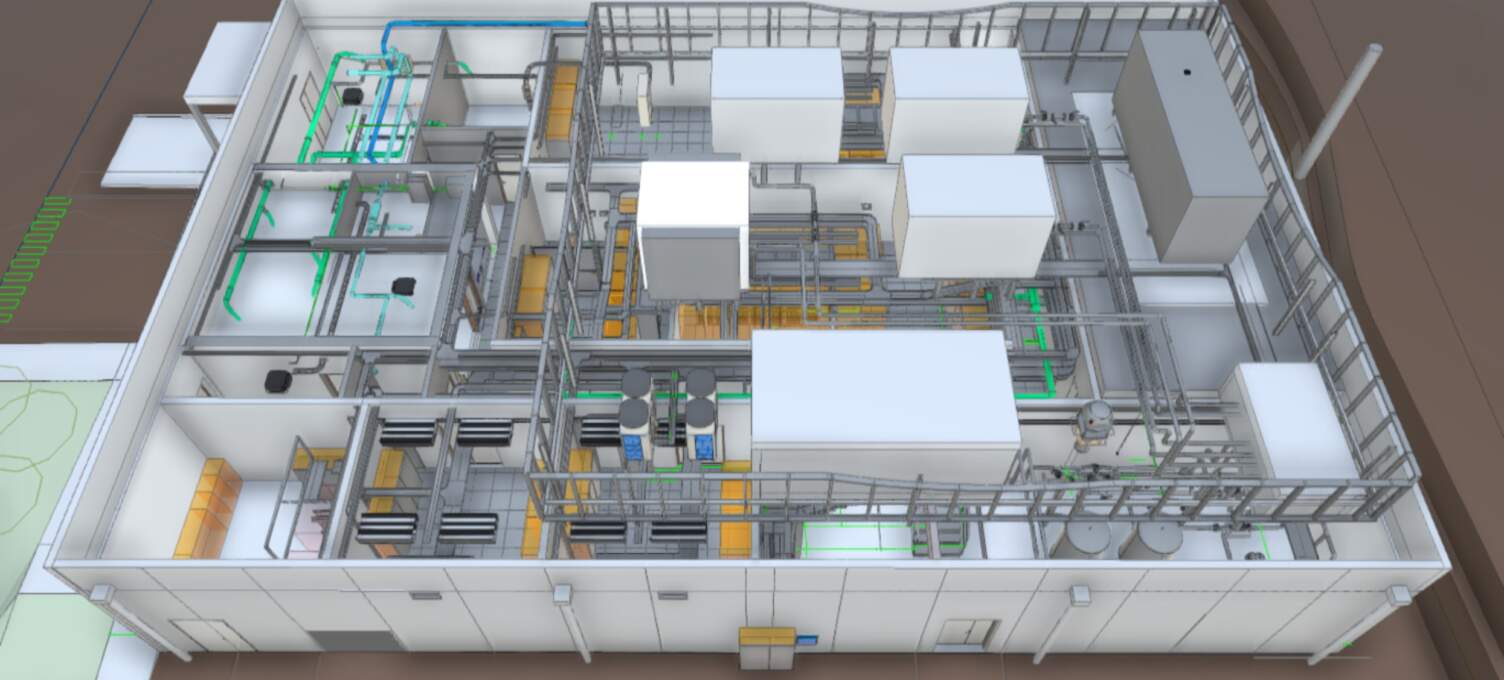
Building Information Modeling (BIM) is a methodology based on a digital model, designed to facilitate the design, operation, and long-term maintenance of a building or infrastructure.
It also allows for the simulation and better visualization of a project. This approach is gaining ground in data center design and construction methods. As pioneers, countries such as Singapore and the United Kingdom have resolutely moved toward standardizing this innovative technology in the construction industry. Given the complexity of data center management, BIM technology appears to have all the necessary tools for more efficient and optimized infrastructure management.
BIM: What is it?
Building Information Modeling (BIM) is both a “process” and a working method. It involves designing, populating, and sharing an “intelligent” 3D digital model. This model takes the form of a digital file (3D file). The goal is to make communication between stakeholders or participants more fluid and efficient. It is, in a sense, a comprehensive digital file that brings together all the elements necessary for its design, construction, and maintenance.
Generally speaking, this method enables all stakeholders to communicate more effectively with one another and keep each other informed, thanks to the virtualization of the project. BIM is generally understood as a technology or software for the virtual design of buildings. It defines who does what, how, and when. One or more intelligent, structured parametric 3D virtual models are used throughout the design, construction, and operation of a building.
How BIM Works in a Data Center
A database generates a 3D model and creates construction drawings for a structure. The BIM process enables the creation, visualization, and testing of this structure in 3D throughout its entire lifecycle. Detailed data thus enables better management of conflict detection and cost control. It also facilitates better design decisions, improves construction performance, and enhances collaboration throughout the data center project. It streamlines the workflow by enabling better project planning through effective coordination of all stakeholders from design through construction.
Process tools in a data center
Non-parametric 2D and 3D design software can be used in Building Information Modeling (BIM) design processes. The most widely recognized programs include Revit Architecture, Revit MEP, Revit Structure, Navisworks, 3ds Max, and AutoCAD. Furthermore, digital technology and digitization are gradually transforming the data center industry.
The Importance of BIM in Data Center Construction
BIM offers numerous benefits for architects, building owners, engineers, and contractors alike. These benefits are evident at every stage of a project. Specifically, BIM enables real-time testing and analysis of a building’s construction through virtual representations. Planning, cost estimation, and risk analysis are streamlined and more effective. Real-time cost estimation allows for immediate verification of the budgetary impact of design changes or variations.
It also facilitates efficient and streamlined collaboration among the various project stakeholders. This also helps all users better understand the project criteria.
BIM: a legal requirement in some countries
Following the United Kingdom in 2016, France and Germany will make its use mandatory for all major government projects in the near future. They thus join the Netherlands, Denmark, Finland, and Norway, which already require it for certain projects. In the data center, the goal of BIM is to gather useful information to help the user understand the process and guide them through the initial steps toward designing and operating the project.